
Kicking off with Siding vs Stucco: Which Exterior is Right for You?, this opening paragraph is designed to captivate and engage the readers, providing an overview of the topic with a mix of informative and engaging content.
The subsequent paragraph will delve further into the details and intricacies of siding and stucco, setting the stage for a comprehensive comparison.
Introduction to Siding and Stucco
Siding and stucco are popular choices for exterior finishing materials for homes and buildings. While both serve the same purpose of protecting the structure from the elements, they have distinct characteristics that set them apart.Siding is a material that is attached to the exterior of a building to provide protection and insulation.
It comes in various materials such as vinyl, wood, fiber cement, and metal. Siding is known for its durability, easy maintenance, and versatility in design options.Stucco, on the other hand, is a cement-based material that is applied to the exterior of a building in multiple layers.
It offers a seamless, smooth finish that is both attractive and long-lasting. Stucco is known for its fire resistance, energy efficiency, and ability to conceal imperfections in the underlying structure.
Benefits of Siding
- Siding is available in a wide range of colors and styles, allowing for customization to suit any architectural design.
- It is relatively easy to install and requires minimal maintenance over time.
- Siding provides additional insulation to the building, helping to improve energy efficiency and reduce heating and cooling costs.
- It is resistant to rot, insects, and moisture, making it a durable option for exterior cladding.
Benefits of Stucco
- Stucco offers a seamless finish that can enhance the aesthetic appeal of a building.
- It is fire-resistant and can help to improve the overall safety of the structure.
- Stucco is a low-maintenance material that does not require frequent painting or repairs.
- It provides excellent durability and can last for many years without needing replacement.
Siding Options
When it comes to siding options for your home, there are several popular materials to choose from, each with its own set of advantages and considerations. Let’s take a closer look at some of the most common siding materials available on the market today.
Vinyl Siding
Vinyl siding is one of the most popular choices for homeowners due to its affordability and low maintenance requirements. It is durable, versatile, and comes in a wide range of colors and styles to suit any home design. However, vinyl siding can crack or fade over time, especially in extreme weather conditions.
Wood Siding
Wood siding offers a classic, natural look that many homeowners find appealing. It can be painted or stained to match your desired aesthetic and is relatively easy to repair or replace individual boards if needed. However, wood siding requires regular maintenance, including painting or staining every few years to prevent rot and decay.
Fiber Cement Siding
Fiber cement siding is a durable and low-maintenance option that is resistant to fire, insects, and rot. It can mimic the look of wood or stucco without the same level of maintenance required. While fiber cement siding is more expensive upfront, it can save you money in the long run due to its longevity and durability.
Other Options
Other siding materials like metal, brick, and stucco also offer unique benefits and considerations. Metal siding is durable and energy-efficient but can be prone to dents and scratches. Brick siding provides a timeless look but comes with a higher price tag and installation costs.
Stucco siding is durable and weather-resistant but may require more maintenance over time to prevent cracking or fading.Overall, the right siding option for you will depend on your budget, aesthetic preferences, and maintenance capabilities. Be sure to consider the climate and environmental factors in your area when choosing the best siding material for your home.
Stucco Characteristics
Stucco is a popular exterior finish known for its durability and classic look. Let’s dive into the composition, application process, and longevity of stucco compared to siding.
Composition of Stucco
Stucco is typically made of a mixture of cement, sand, lime, and water. Sometimes additives like acrylics or glass fibers are included to enhance strength and flexibility. This composition creates a hard, weather-resistant surface that can withstand various elements.
Application Process of Stucco
The application of stucco involves multiple layers being applied to a wire mesh or substrate. The process includes a scratch coat, brown coat, and finish coat. Each layer is carefully applied and allowed to cure before the next one is added.
Proper installation is crucial for the longevity and performance of stucco.
Longevity of Stucco Compared to Siding
Stucco is known for its longevity, often lasting 50 years or more with proper maintenance. It is resistant to fire, rot, and pests, making it a durable option for homeowners. In comparison, siding materials like vinyl or wood may require more frequent maintenance and replacement over time.
Stucco’s durability and low maintenance requirements make it a desirable choice for many homeowners looking for a long-lasting exterior finish.
Climate Considerations
When it comes to choosing between siding and stucco for your home’s exterior, climate considerations play a crucial role in determining which material is more suitable. Both siding and stucco have unique characteristics that impact how they perform in different weather conditions.
Siding Performance in Various Climates
- Siding, such as vinyl or fiber cement, is known for its versatility and ability to withstand a wide range of climates.
- Vinyl siding is particularly popular in colder climates due to its ability to resist moisture and harsh weather conditions.
- Fiber cement siding is durable and can withstand hot, humid climates without warping or rotting.
Stucco Durability in Different Weather Conditions
- Stucco is a popular choice in dry, warm climates due to its ability to regulate temperature and provide insulation.
- In areas with frequent rain or high humidity, stucco may be prone to cracking or moisture damage if not properly maintained.
- Stucco can be more challenging to repair in regions with extreme temperature variations that may cause expansion and contraction.
Aesthetics and Design
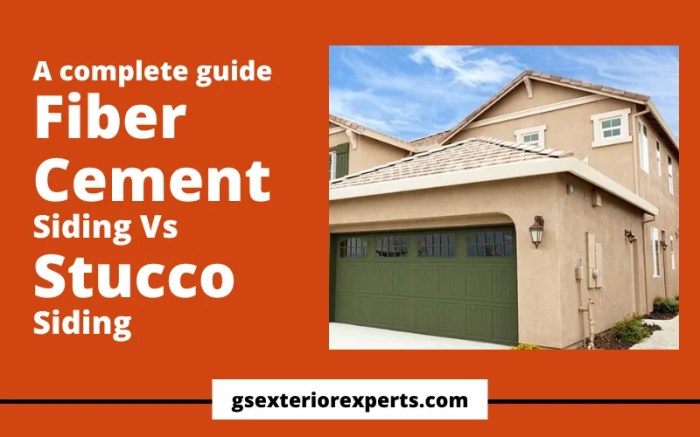
When it comes to the aesthetics and design of your home’s exterior, both siding and stucco offer unique visual appeal and customization options to suit your style preferences.
Comparing Aesthetic Appeal
Siding typically provides a traditional, versatile look with a wide range of textures and colors to choose from. It can mimic the appearance of wood, brick, or stone, offering a classic and timeless appeal. On the other hand, stucco tends to create a more uniform, smooth finish that exudes a modern and sleek aesthetic.
The choice between siding and stucco often comes down to personal preference and the architectural style of your home.
Architectural Styles and Pairings
Siding is commonly found on various architectural styles, including Colonial, Cape Cod, and Craftsman homes. Its versatility allows it to complement both traditional and contemporary designs. Stucco, on the other hand, is frequently used in Mediterranean, Spanish, and Southwestern-style homes due to its smooth and textured finish that enhances the architectural details of these designs.
Color Options and Customization
Siding offers a vast array of color options, allowing homeowners to choose hues that match their vision and blend seamlessly with the surrounding landscape. From bold and vibrant colors to more subdued tones, the customization possibilities with siding are endless.
Stucco also offers a range of colors, but the application process can limit the number of choices compared to siding. However, stucco can be painted to achieve specific colors or refreshed over time to update the look of your home.
Cost Analysis
When considering the cost of siding versus stucco for your home’s exterior, it is important to look at both the initial expenses and the long-term implications.
Initial Installation Costs
Installing siding typically involves lower upfront costs compared to stucco. The materials for siding are generally more affordable, and the installation process is usually quicker and requires less specialized labor.
Long-Term Cost Implications
While siding may have a lower initial cost, it is essential to consider the long-term expenses. Siding may require more frequent maintenance, such as painting or repairs due to damage from weather or pests. On the other hand, stucco is more durable and requires minimal maintenance over time, potentially reducing long-term costs.
Maintenance and Repairs
- Siding: Regular maintenance like painting and repairs can add up over time, increasing the overall cost.
- Stucco: Requires minimal maintenance, reducing the need for costly repairs in the long run.
Energy Efficiency
- Siding: Depending on the type of siding chosen, it may offer less insulation, leading to higher energy bills in the long term.
- Stucco: Provides better insulation properties, potentially saving on heating and cooling costs over time.
Environmental Impact
When it comes to the environmental impact of siding materials and stucco, it’s essential to consider factors such as eco-friendliness, sustainability, and overall carbon footprint.
Siding Materials
Siding materials like fiber cement, wood, and vinyl have varying degrees of eco-friendliness. Fiber cement, made from a mixture of cement, sand, and cellulose fibers, is known for its durability and low maintenance, but the production process can release harmful emissions.
Wood siding, while a renewable resource, may contribute to deforestation if not sourced sustainably. Vinyl siding, on the other hand, is not biodegradable and may release toxic chemicals during production and disposal.
Stucco Production and Application
Stucco, a traditional building material made of cement, sand, lime, and water, is generally considered more environmentally friendly compared to some siding materials. The production of stucco involves fewer chemical additives and synthetic components, making it a more sustainable option.
Additionally, stucco is known for its longevity, reducing the need for frequent replacements and minimizing waste.
Overall Environmental Impact
When comparing the overall environmental impact of siding and stucco, factors such as energy efficiency, material longevity, and recyclability must be taken into account. While some siding materials may offer energy-saving benefits, they may also require more maintenance and replacement over time, leading to increased waste.
Stucco, with its durability and minimal maintenance requirements, can be a more sustainable choice in the long run, despite the energy-intensive production process.
Closure
Concluding our discussion on Siding vs Stucco: Which Exterior is Right for You?, we have explored the key differences, benefits, and considerations when choosing between these two popular materials for your home’s exterior.
Commonly Asked Questions
Which material requires less maintenance, siding or stucco?
Siding typically requires more maintenance compared to stucco, which is known for its longevity and durability with minimal upkeep needed.
Can stucco be painted to change its color?
Yes, stucco can be painted to alter its color, providing flexibility in design choices for homeowners.
Is siding more cost-effective in the long run compared to stucco?
While the initial installation cost of stucco may be higher, its durability and low maintenance requirements can make it more cost-effective in the long run when compared to certain types of siding.